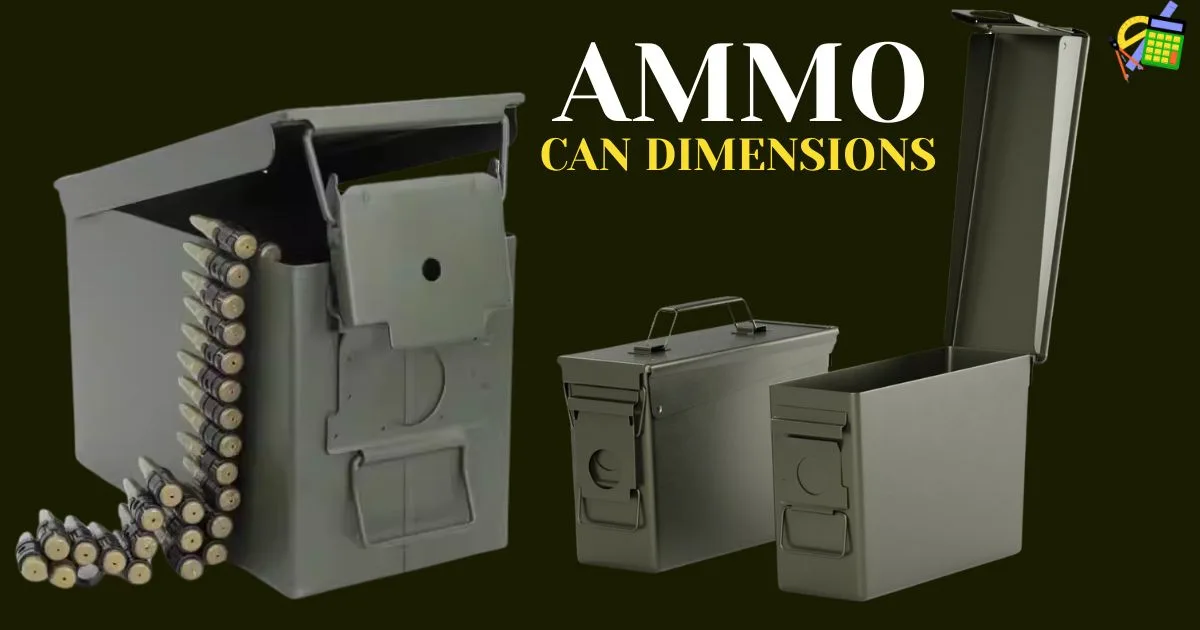
Picking the wrong ammo can dimensions turns your neat stash into a rattling mess. Been there, done that. One wrong size and your 5.56 boxes swim around like goldfish in a bathtub. This guide fixes that forever.
We’re diving deep into ammo can sizes, exact heights, diameters, interior space, and even steel thickness so you never waste a dollar on the wrong tin again.
Standard Ammo Can Sizes
Here are the true kings of surplus shelves. These are the sizes you’ll find at gun shows, estate sales, and every online ammo site in the USA.
Quick Reference Chart
| Ammo Can Type | Exterior Dimensions (L × W × H) | Interior Usable Space (L × W × H) | Empty Weight | Typical Load |
|---|---|---|---|---|
| .30 Cal Ammo Can | 10.9 × 3.7 × 7.2 in | 9.8 × 3.5 × 6.1 in | ~5 lb | 500–600 rds 5.56 (loose) |
| .50 Cal Ammo Can (M2A1) | 11.7 × 6.0 × 7.5 in | 11.0 × 5.6 × 6.9 in | 5.8–6.2 lb | 800–1,000 rds .308 |
| 40mm Grenade Can (PA-19) | 17.5 × 6.1 × 9.5 in | 16.8 × 5.5 × 8.0 in | ~14 lb | 32 linked 40mm |
| 81mm Mortar Can (M128A1) | 28.9 × 11.3 × 12.4 in | 27.5 × 10.0 × 10.5 in | 28–32 lb | 4× 81mm rounds |
30 Cal Ammo Can Dimensions
Exterior: 10.9 × 3.7 × 7.2 inches (some minor variations exist between manufacturers)
Interior usable space: 9.8 × 3.5 × 6.1 inches
Weight empty: about 5 pounds
Typical load: 240 rounds of linked 7.62×51 or 500–600 loose 5.56×45
This is the Goldilocks size for most rifle shooters. It slides perfectly under a truck seat and stacks three-high in most gun safes.
More Posts: Red Bull Can Dimensions: Sizes, Heights & Diameters
50 Cal Ammo Can Dimensions
Exterior: 11.7 × 6.0 × 7.5 inches
Interior usable space: 11.0 × 5.6 × 6.9 inches
Weight empty: 5.8–6.2 pounds
Typical load: 100–120 rounds of .50 BMG on links or 800–1,000 rounds of loose .308
This is the one you see in every action movie. The extra height and width swallow bulk ammo like it’s nothing.
40mm Grenade Can Dimensions
Exterior: 17.5 × 6.1 × 9.5 inches (the long PA-19 style most people sell)
Interior: roughly 16.8 × 5.5 × 8.0 inches
Holds: 32 linked 40mm grenades in the original config
Perfect for anyone reloading shotgun shells in bulk or storing cleaning gear.
More Posts: Paint Can Dimensions: Sizes, Heights & Diameters
Giant Mortar Cans
81mm Mortar Ammo Can Dimensions
Exterior: 28.9 × 11.3 × 12.4 inches (M128A1 can)
Interior: 27.5 × 10.0 × 10.5 inches
Weight empty: 28–32 pounds
Holds: four complete 81mm mortar rounds with fuzes installed
These monsters show up at CMP stores and heavy-mil surplus auctions. Shooters love them for reloading benches because you can stand inside one (yes, really).
Pro Tips
- Measure interior height first if you use foam inserts.
- Two .30 cal cans side-by-side fit perfectly on a standard 12-inch garage shelf.
- Four .50 cal cans make a rock-solid 24-inch cube when stacked 2×2.
- Always remove the spoon latch on new cans—stops rust and makes opening smoother.
More Posts: Monster Can Dimensions: Sizes, Heights & Diameters
FAQ’s
What are the dimensions of a standard ammo can?
Most people mean the .50 cal ammo can: 11.7 × 6.0 × 7.5 inches outside, 11.0 × 5.6 × 6.9 inches inside.
What are the inside dimensions of a 30 cal ammo can?
Clean interior space is 9.8 × 3.5 × 6.1 inches. That’s why 500 rounds of 5.56 fit loose with zero rattle.
What are the dimensions of a 40 cal ammo can?
The common 40mm grenade can (often called “40 cal can” by civilians) measures 17.5 inches long outside with about 16.8 inches usable length inside.
What are the dimensions of the 81mm mortar ammo can?
28.9 × 11.3 × 12.4 inches exterior. Interior gives you 27.5 inches of length—perfect for long cleaning rods or reloading dies.
What is the 1 3 2 3 rule for mortars?
U.S. Army doctrine for 81mm crews: 1 round in the tube, 3 rounds immediately ready in hands, 2 rounds being carried forward, 3 rounds unpacked from the can. Keeps the gun fed without overloading the team.
How thick is the steel on ammo cans?
Military cans use 0.9–1.1 mm (20-gauge) steel. Cheap imports can be as thin as 0.6 mm and dent easily.
Conclusion
Match the ammo can sizes, heights, and diameters to your actual ammo and storage space. Do that and your gear stays dry, organized, and ready for the next range trip—or whatever comes after.
Now you know exactly which can to grab next time you see a stack at the gun show. No more guessing. No more wasted money. Just pure, airtight, American-made toughness.

Hi, I’m Lachlan, the admin at Feet2Inches.com. We simplify measurements with our free feet to inches calculator—fast and accurate for any project.
Explore our blogs for tips on units like meters and yards. From DIY to daily conversions, we’ve got you.
Questions? Email admin@feet2inches.com. Let’s measure right together!