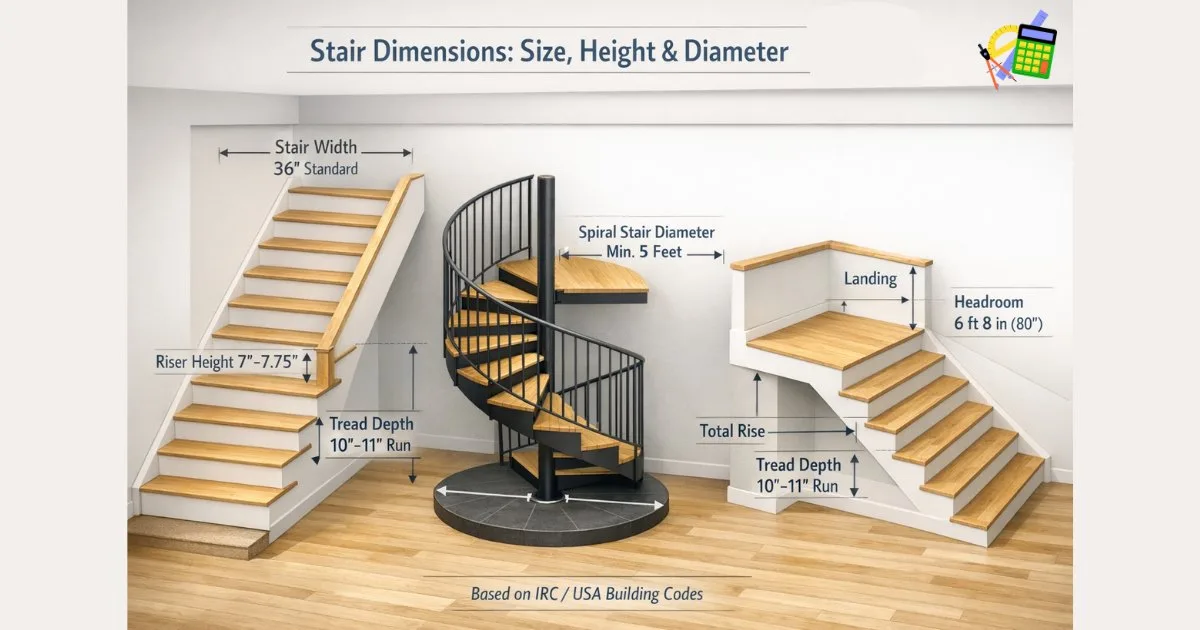
Stairs form a key part of any building. They connect floors and ensure safe movement. Proper stair dimensions: size, height & diameter matter for comfort and safety. In the USA, building codes guide these measurements.
Standard Stair Height
Stair height, or riser, typically ranges from 7 to 7.75 inches. The maximum allowed is 8 inches per US codes. This keeps steps manageable for most people.
Taller risers tire legs faster. Studies from the American Society of Safety Professionals note that risers over 8 inches raise injury odds by 20%. Stick to 7 inches for best comfort in daily use.
Standard Stair Size
Stair size in depth, called tread or run, sits at 10 to 11 inches. Minimum is 9 to 10 inches based on location.
The popular 7-11 rule for stairs pairs a 7-inch rise with an 11-inch run. This creates a gentle slope. Builders use it for ergonomic designs that feel natural.
Stair Diameter for Spiral and Curved Stairs
For spiral stairs, stair diameter starts at 5 feet minimum. This allows safe turning without cramped steps.
Diameter affects tread width at the center. Codes require at least 26 inches wide at the walk line. Smaller diameters suit tight spaces but need careful planning to meet safety standards.
Stair Width Dimensions
Ideal Stair Width for Comfort and Accessibility
For everyday ease, aim for 38 to 42 inches in stair width dimensions. This lets two people pass or carry items.
ADA guidelines suggest wider stairs for wheelchairs or aids. Comfort widths reduce bumps and improve flow in busy homes.
Factors Influencing Stair Width Dimensions
Building type shapes stair width. Homes need less than offices. Occupancy load matters too—more people mean wider paths.
Local rules vary. For example, some states add fire safety extras. Always check area-specific codes for compliance.
More Posts: Kitchen Island Dimensions: Size, Height & Diameter
Additional Stair Dimension Elements
Headroom in Stair Dimensions
Headroom requires 6 feet 8 inches minimum, or 80 inches. This prevents head bumps during climbs.
Low headroom causes discomfort. Building experts cite cases where insufficient clearance led to code violations and remodels.
Nosing and Overhang in Stair Sizes
Nosing is the front edge overhang, usually 0.75 to 1.25 inches. Maximum is 1.5 inches.
It helps feet grip and adds to effective tread depth. Proper nosing cuts slip risks on wet surfaces.
Landing Dimensions for Safe Stair Heights
Landings need 36 inches depth at least, matching stair width.
Place them every 12 feet vertically. They offer rest spots and turn areas, vital for long flights.
Building Codes and Regulations for Stair Dimensions
IRC vs. IBC: Key Differences in the USA
The IRC governs home stair dimensions: size, height & diameter. It stresses uniform steps.
IBC handles commercial. It calls for wider widths to aid escapes. Both aim for safety but differ in scale.
Common Code Violations in Stair Sizes and Heights
Inconsistent risers top violations. Variations over 3/8 inch are unsafe.
Inadequate stair width or headroom follows. Inspections catch these, leading to costly fixes.
Variations by State: USA-Specific Stair Dimension Rules
California adds seismic tweaks to stair height. Florida focuses on hurricane resistance.
National codes form the base, but states adapt for local needs. Consult authorities for precise rules.
More Posts: Dollar Bill Dimensions: Size, Height & Diameter
Designing Stairs
Calculating Stair Rise and Run
Divide total floor height by desired stair rise to find step count. Adjust for even sizes.
Use apps or formulas for accuracy. This ensures balanced stair dimensions.
Ergonomic Considerations in Stair Heights and Sizes
Aim for 30 to 35-degree angles in stair height and size. This mimics natural strides.
Test designs for feel. Ergonomics boost long-term use without fatigue.
Types of Stairs and Their Unique Dimensions
Straight Stairs: Standard Size and Height
Straight stairs use basic standard stair size and height. They’re simple to build and measure.
Uniform runs make them reliable. Ideal for most homes.
Spiral Stairs: Focus on Diameter and Compact Sizes
Spiral stairs save space with 5-foot stair diameter. Treads narrow inward, needing 7.5 inches at 12 inches from center.
Great for lofts but check codes for occupancy limits.
L-Shaped and U-Shaped: Adjusting Width and Height
These include landings, keeping stair width and height consistent.
Turns add style but demand precise measurements for flow.
More Posts: Water Bottle Dimensions: Size, Height & Diameter
FAQ’s
What is the 7-11 rule for stairs?
The 7-11 rule suggests a 7-inch riser height and 11-inch tread depth for comfortable, safe stairs.
What is the standard size for stairs?
Standard USA residential stairs: 36-inch width, 7-7.75-inch risers, 10-11-inch treads.
What is the 27 inch rule for stairs?
Refers to minimum clear width between handrails: 27 inches for some codes, but typically 31.5 inches under IRC.
What is the 17 inch rule for stairs?
Combines max riser (8 inches) + min tread (9 inches) = 17 inches min for step proportions.
Do I need a railing for 3 steps?
Yes, if rise exceeds 30 inches (about 3-4 steps); required by IRC for safety.
What are common stair design mistakes?
Inconsistent dimensions, inadequate headroom, poor nosing, ignoring codes.
What is standard stair rise and run?
Rise: 7-7.75 inches; run: 10-11 inches per IRC.
What’s the best stair width for comfort?
38-42 inches for easy passage, especially with items.
Is a 7 inch step too high?
No, 7 inches is standard and comfortable; max is 7.75-8 inches.
Conclusion
Mastering stair dimensions—size, height, and diameter—ensures safe, comfortable stairs. Follow USA codes like IRC for best results. Compliant designs raise home safety and value. Always hire experts for custom fits.

Hi, I’m Lachlan, the admin at Feet2Inches.com. We simplify measurements with our free feet to inches calculator—fast and accurate for any project.
Explore our blogs for tips on units like meters and yards. From DIY to daily conversions, we’ve got you.
Questions? Email admin@feet2inches.com. Let’s measure right together!