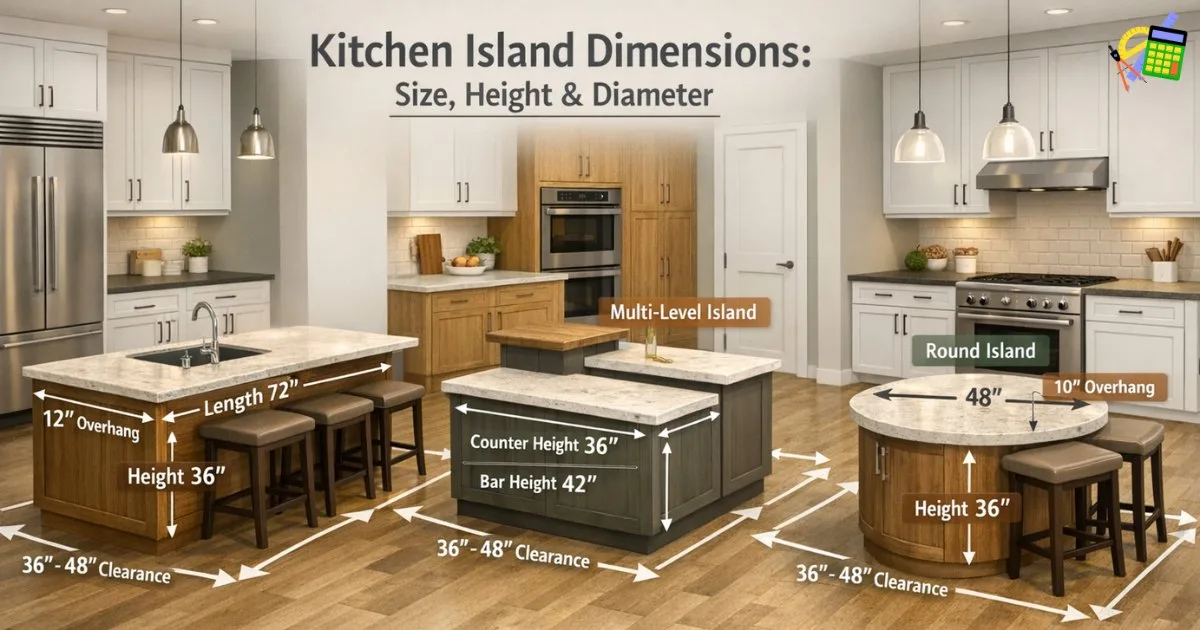
Kitchen islands stand as key features in many USA homes. They act as spots for cooking, eating, and gathering. Getting the kitchen island dimensions: size, height & diameter right boosts how well your space works.
Understanding Kitchen Island Dimensions Basics
What Are Standard Kitchen Island Dimensions?
Kitchen island dimensions cover length, width, height, and shape. These factors shape how the island fits and functions. Per NKBA guidelines, a basic island often spans 4 to 10 feet long and 2 to 4 feet wide.
Height sits at 36 inches for counters or 42 inches for bars. For round designs, diameters range from 3 to 5 feet. These sizes suit most USA kitchens. They follow building codes for safety and access.
Kitchen Island Height Standards
Standard kitchen island height is 36 inches for cooking tasks. This matches most counters. Bar-style heights hit 42 inches for casual seats.
Multi-level designs mix both. They let you prep at one spot and eat at another.
Families with kids or varied users like adjustable heights. These adapt to all. NKBA suggests 28 to 34 inches for seated areas with knee space. Pick based on your household.
Kitchen Island Diameter Considerations
Round islands save space in open USA kitchens. Typical kitchen island diameter starts at 3 feet for small setups.
Go up to 5 feet for more room. These shapes soften edges and aid flow. Choose circles for modern looks.
Kitchen Island Dimensions
Small Kitchen Solutions
In 10 by 10 feet spaces, fit 3 by 3 foot islands. Portable ones add flex. Urban USA apartments use narrow designs for storage without bulk.
These keep flow open. Minimum clearance is 36 inches. They suit tight budgets too.
Medium to Large Kitchen Optimizations
Go for 6 to 8 foot lengths here. Multi-tier heights mix uses. Rectangular shapes aid traffic. Circular diameters enhance open feels.
In big USA homes, add L-shapes for zones. This maxes function.
Custom vs. Prefab Islands
Custom fits exact kitchen island dimensions. Prefab sticks to standards like 36 inch height. Custom costs more but matches needs.
In USA markets, custom boosts resale. Prefab saves time.
More Posts: Dollar Bill Dimensions: Size, Height & Diameter
Factors Influencing Kitchen Island Dimensions
Space and Layout Requirements
Measure your floor first. Leave 42 to 48 inches around the island for easy movement. This follows NKBA work aisle rules. In USA homes, common layouts like galley need tighter fits.
Islands boost the kitchen work triangle – sink, fridge, stove. The triangle’s legs should span 4 to 9 feet each. Total sides add to 13 to 26 feet. No leg crosses the island by over 12 inches. This keeps tasks smooth.
Functionality and Usage
Think about daily use. For prep, wider kitchen island sizes hold tools. Add sinks for cleanup ease. Seating needs 12 to 15 inch overhangs. Height affects comfort here.
Storage depth starts at 24 inches for cabinets. This impacts overall dimensions. In new USA homes, 73% feature islands for multi-use. Plan for your habits.
Material and Design Trends in 2025-2026
Trends lean to slim islands with floating looks. In 2026, work tables replace some built-ins for rustic charm.
Unfitted designs mix free-standing pieces. Materials like quartz add durability without changing heights much.
Ergonomics and Accessibility
Comfort matters. Standard heights suit standing users. For access, ADA sets max at 34 inches with knee space. Reach across should not exceed 24 inches.
Families need kid-safe edges. Pets benefit from lower shelves. Use these for safe, inclusive kitchen island dimensions.
More Posts: White Claw Can Dimensions: Size, Height & Diameter
FAQ’s
What is the standard size of a kitchen island?
The standard size for a kitchen island is 4 to 6 feet long and 2 to 3 feet wide. Height is often 36 inches. These fit most USA homes and allow basic functions like prep and storage.
What is the 3×4 kitchen rule?
This rule ties to the kitchen work triangle. It suggests legs of 4 feet min, but often means compact layouts. Actual guidelines set 4 to 9 feet per side for smooth flow.
What is the recommended overhang for an island?
Aim for 12 to 15 inches overhang for seating. This gives leg room. NKBA notes it for comfort at bar heights.
Is 42 inches enough space between counter and island?
Yes, 42 inches works for one cook. It allows door opens and passage. For multiple users, go to 48 inches per NKBA.
What is replacing the kitchen island in 2025?
In 2025-2026, work tables and unfitted pieces rise. They offer flex over fixed islands. Trends show peninsulas or carts for small spaces.
Can I fit an island in a 12×12 kitchen?
Yes, a 3 by 4 foot island fits. Leave 42 inches around. It adds function without crowding in USA medium kitchens.
Is a 6 foot island too small?
No, a 6 foot island suits many needs. It holds seating for 3 and prep space. Ideal for medium USA homes.
What is the golden ratio in kitchen?
The golden ratio is 1:1.618. It guides proportions for balance. Use it to size cabinets or islands for harmony in designs.
Is 34 inches enough space between counter and island?
No, 34 inches is tight. NKBA suggests 36 to 42 inches min for safe passage. Less risks bumps.
Conclusion
Right kitchen island dimensions: size, height & diameter make your space shine. They blend function and style. Measure well and follow guidelines. Think about trends and needs. Check your kitchen today. Share thoughts below or seek pro help for custom fits.

Hi, I’m Lachlan, the admin at Feet2Inches.com. We simplify measurements with our free feet to inches calculator—fast and accurate for any project.
Explore our blogs for tips on units like meters and yards. From DIY to daily conversions, we’ve got you.
Questions? Email admin@feet2inches.com. Let’s measure right together!