Whether you’re measuring milk for a recipe, buying a pint of ice cream, or ordering a beer at your local bar, knowing exactly how much is a pint saves you from costly kitchen mistakes. This guide breaks down everything you need to know about how much is a pint, with precise measurements, real-life examples, and practical conversions you’ll actually use.
How Big Is a Pint
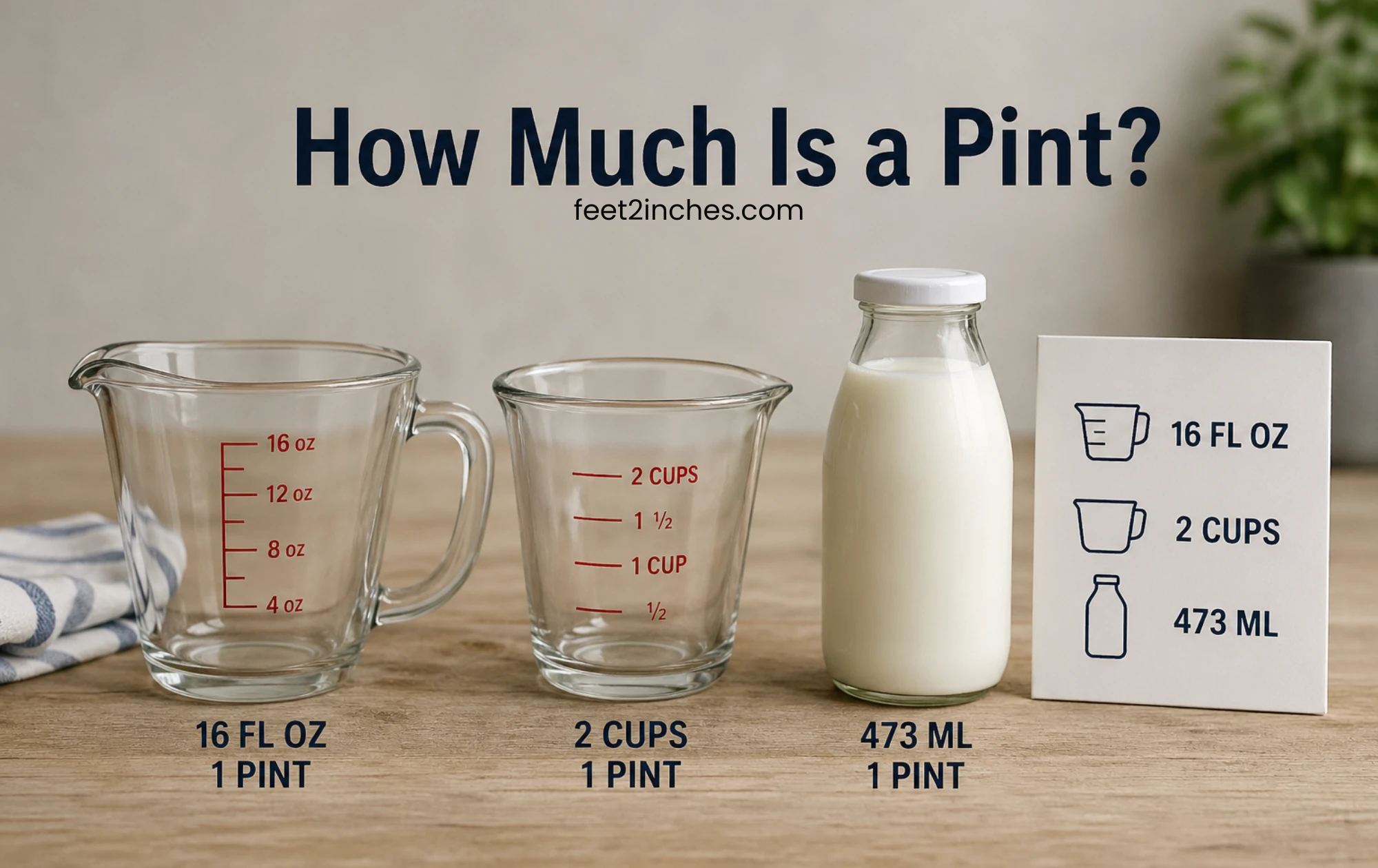
A pint is a standard unit of liquid volume in the U.S. customary system, holding exactly 16 fluid ounces — equivalent to 473 milliliters.
A U.S. pint — exactly half a quart — measures roughly the height of an average adult hand, about 4–5 inches tall when held in a standard container.
| Pints | Fluid Ounces | Milliliters |
|---|---|---|
| 0.5 pint | 8 fl oz | 236.5 milliliters |
| 1 pint | 16 fl oz | 473 milliliters |
| 2 pints | 32 fl oz | 946 milliliters |
| 4 pints | 64 fl oz | 1892 milliliters |
How Many Cups in a Pint
There are exactly 2 cups in a pint in the U.S. measurement system, since each cup holds 8 fluid ounces and two cups together reach the full 16 fl oz mark.
Nurses and dietitians tracking daily fluid intake also use the 2-cups-per-pint rule to calculate hydration for patients requiring up to 8 pints — or 16 cups — of fluids daily.
| Cups | Pints |
|---|---|
| 1 cup | 0.5 pint |
| 2 cups | 1 pint |
| 4 cups | 2 pints |
| 8 cups | 4 pints |
| 16 cups | 8 pints |
How Many Ounces in a Pint
There are 16 fluid ounces in a U.S. pint and 20 fluid ounces in a British Imperial pint — a distinction the U.S. National Institute of Standards and Technology (NIST) standardizes clearly in American commerce.
A pint of whole milk — exactly 16 fl oz — delivers approximately 300 mg of calcium, making it a trusted medical reference point for daily nutrient tracking by registered dietitians.
| Pints | Fluid Ounces |
|---|---|
| 0.5 US pint | 8 fluid ounces |
| 1 US pint | 16 fluid ounces |
| 1 UK pint | 20 fluid ounces |
| 2 US pints | 32 fluid ounces |
| 4 US pints | 64 fluid ounces |
More Posts: How Much Is a Liter? with 5 Real-Life Examples (2026)
5 Real-Life Examples of How Much Is a Pint
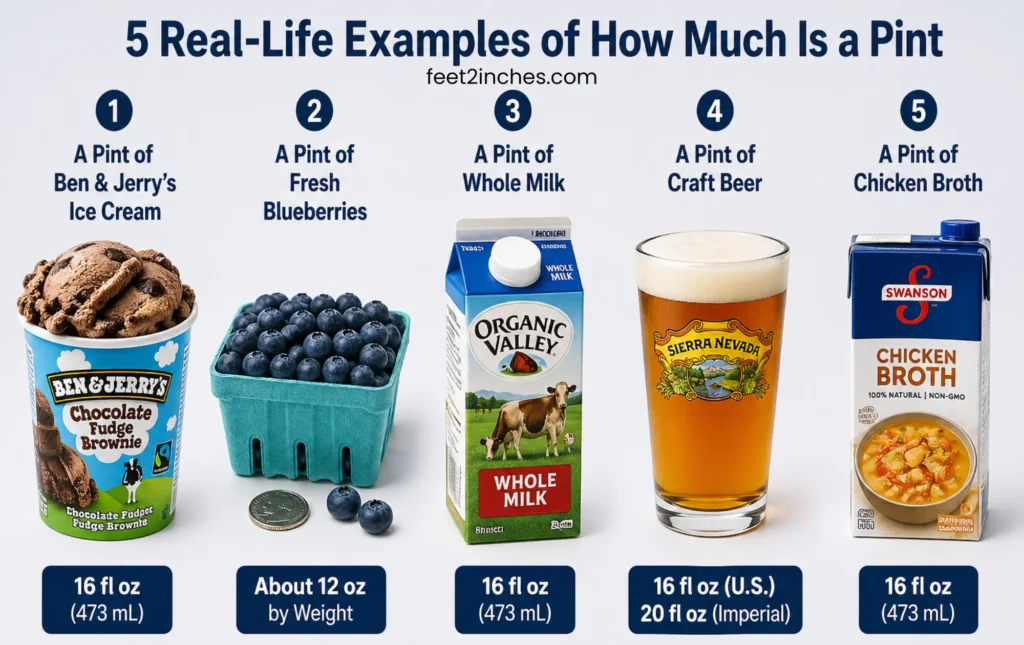
A Pint of Ben & Jerry’s Ice Cream — 16 fl oz
Ben & Jerry’s labels its standard containers as 1 pint = 16 fl oz (473 mL), one of the most widely recognized pint-sized products in U.S. grocery stores. In daily life, this is the tub you grab from the freezer after a long day — it fills exactly 2 standard measuring cups with no leftover liquid.
A single pint of ice cream contains roughly 1,000–1,200 calories, a figure dietitians reference directly when counseling patients on portion awareness and caloric density. The container sits about 3.5 inches in diameter — close to the width of an adult palm — making it one of the most tactile pint references in any American household.
A Pint of Fresh Blueberries — About 12 oz by Weight
A U.S. pint of fresh blueberries weighs approximately 12 dry ounces, not 16, because pints measure volume — and blueberries leave natural air gaps between each berry in the container. Driscoll’s, one of the most widely distributed berry brands in the U.S., sells its blueberries in standard 1-pint baskets found in virtually every American grocery produce section.
From a medical standpoint, one pint of blueberries delivers roughly 80 calories and over 3.5 grams of dietary fiber, a reference point physicians and nutritionists use when prescribing antioxidant-rich foods for cardiovascular health. Visually, a pint basket sits next to a nickel — 0.835 inches in diameter — giving you a real-world coin reference for the scale of this everyday pint-sized container.
A Pint of Whole Milk — 16 fl oz, 473 mL
Organic Valley sells pint-sized (16 fl oz) cartons of whole milk that are a staple in American school lunches, coffee shops, and home kitchens nationwide. In the kitchen, 1 pint of whole milk equals exactly 2 cups, making it the precise amount most pancake, muffin, and béchamel sauce recipes call for in standard U.S. cookbooks.
A single pint of whole milk provides approximately 300–320 mg of calcium — roughly 25–30% of an adult’s daily recommended intake per the USDA Dietary Guidelines — making it one of the most medically significant pint-sized volumes in everyday nutrition. The carton stands about 4 inches tall, roughly the length of three stacked quarters, giving you a concrete coin-based physical anchor for what a pint looks like in real life.
A Pint of Craft Beer — 16 fl oz U.S. vs. 20 fl oz Imperial
A certified U.S. pint glass holds exactly 16 fl oz of beer, while a British Imperial pint glass holds 20 fl oz — a 4-ounce difference that affects both your wallet and your calorie count per serving. Sierra Nevada serves its flagship Pale Ale in 16 oz pint glasses at certified craft establishments across the U.S., where a full, honest pour means the glass reaches the brim.
A 16 oz pint of regular beer contains roughly 150–200 calories and 14–15 grams of alcohol, a range physicians cite directly when advising patients on moderate alcohol consumption guidelines. A standard pint glass stands about 6 inches tall — close to the length of an adult’s index finger to wrist — making it a body-part reference you can check against without any tools at hand.
A Pint of Chicken Broth — 16 fl oz in Everyday Cooking
Swanson sells its chicken broth in a standard 32 fl oz carton — exactly 2 pints — making it one of the clearest real-world demonstrations of how much is a pint when you’re mid-recipe. Half that carton, 1 pint = 16 fl oz, is the amount most commonly called for in risotto, soup, and gravy recipes found across mainstream American cookbooks.
In medical nutrition, pint-sized servings of low-sodium broth are frequently recommended by registered dietitians for post-surgery liquid diets, since a full 16 oz pint provides roughly 30–40 calories with around 800–860 mg of sodium — a carefully monitored figure for cardiac and post-operative patients. A 16 oz broth container fits neatly in one hand, roughly the span of an adult palm to fingertip — about 7 inches — giving you a built-in body-part measurement you can verify anywhere.
More Posts: How Much Is a Quart? with 5 Real-Life Examples (2026)
Conclusion
How much is a pint comes down to one precise number in the U.S. — 16 fluid ounces, equal to 2 cups or 473 mL, whether you’re measuring ice cream, beer, milk, or broth.
Knowing how much is a pint helps you cook with accuracy, shop smarter, and understand nutrition labels without second-guessing every measurement you encounter.
FAQ’s About How Much Is a Pint
How much is a pint in fluid ounces?
A pint equals exactly 16 fluid ounces in the U.S. system, or 20 fluid ounces in the British Imperial system — always confirm which system your recipe uses before measuring.
How much is a pint compared to a cup?
One pint equals exactly 2 cups in the U.S., since each cup holds 8 fluid ounces and two cups together hit the full 16 fl oz pint mark.
How much is a pint of beer in ounces?
A true U.S. pint of beer is 16 fl oz, though British Imperial pint glasses hold 20 fl oz — a difference of 4 full ounces per serving that adds up quickly across a night out.
Is a pint the same as a pound?
Not exactly — the old saying “a pint’s a pound the world round” is a rough guide for water, but 1 pint of water actually weighs about 1.04 pounds, not a precise 1-to-1 match.
How much is a dry pint vs. a liquid pint?
A U.S. liquid pint is 16 fl oz (473 mL), while a U.S. dry pint is slightly larger at 18.6 fl oz (551 mL) — used for produce like berries, never for liquid recipe measurements.
How much is a pint in milliliters?
One U.S. pint equals 473 milliliters, while one British Imperial pint equals 568 milliliters — a difference that matters in international recipes and precise medical dosing contexts.

Hi, I’m Lachlan, the admin at Feet2Inches.com. We simplify measurements with our free feet to inches calculator—fast and accurate for any project.
Explore our blogs for tips on units like meters and yards. From DIY to daily conversions, we’ve got you.
Questions? Email admin@feet2inches.com. Let’s measure right together!